
The Matrix
"We live in a world where there is more and more informaiton, and less and less meaning." ~Jean Baudrillard, Simulacra and Simulation

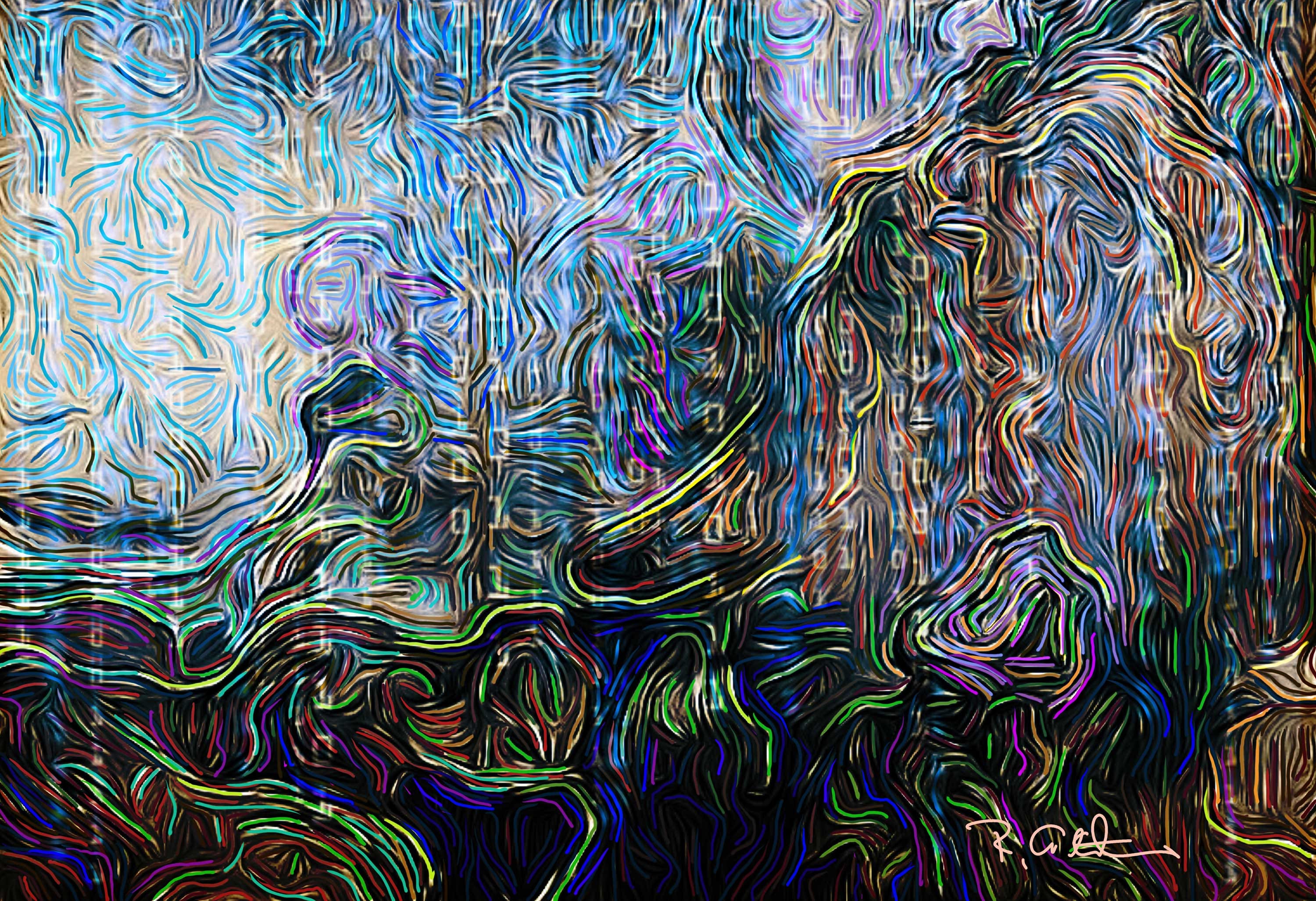
The Matrix Was a Warning We Didn’t Heed
In 1999, as the internet was first becoming commercially viable, I attended a 7-day sesshin in San Diego with my Zen Teacher, Roshi Nicolee Jikyo McMahon. At the retreat’s end, Nicolee and I went to a theatre and watched The Matrix. The movie had a profound impact on me, and many years later, as I write this, I realize how prescient–anticipating a time when we might trade our humanity for machines.
I didn’t fully understand modernity back then. But as the years passed, I have grown increasingly aware of its impact both positive and negative on every aspect of our culture. I’m no Luddite. I use computers daily, and increasingly depended on AI to run and manage a Zen Center in Oak Park, IL.
Yet if it wasn’t clear in the late 90’s, it should be obviouis now that simulations are replacing human interactions. We are increasingly isolated by our phones, rapidly replacing human tasks with AI. and what was unthinkable in the 90’s, shopping, working, and conversing primarily online.
Now there is talk of replacing teachers with AI. This should alarm us. When we replace humans with machines, we are lose a critical aspect of our humanity, and seed our future to the Matrix. AI may be a highly intelligent, but it is not conscious. If we fail to discern this difference, I’m afraid we are surrender our humanity in the process.
The Embodied Cost
We humans require face-to-face interaction. Evolution has designed our brains with mirror neurons that help us learn from other humans’ intentional actions. There are subtle ways in which we co-regulate each other in pro-social engagement that no machine can replace.
We often talk about how people are increasingly disembodied because of our fragmented attention. But what does this really mean? How can we be disembodied when any experience we have occurs through the body? We are always embodied. The more salient question is: What is being imprinted in our embodiment? Is it safety and mutual learning? Pro-social engagement and behavior? Or something else?
The truth is more disturbing: we are not disembodied–we are dissociated from the healthy embodiment that would bring us home to the intimacy of our own humanity. And dissociation is a characteristic of trauma.
Modernity as the Matrix
Modernity is not a concept. It is the air we breath. The water we drink, and the stories we tell ourselves. It doesn’t allow for other stories or perceptions because we have already swallowed the blue pill. We have embodied modernity itself, and the consequence is serious: there are stories we cannot hear and realities around us we are unable to perceive or articulate.
Modernity has brought benefits, but it has also brought us the poly-crisis which we now experience in our relationships, families, schools, economy, politics and civic life. The logic of modernity is the continual story of progress–a seductive story, just like the Matrix, that promises safety in isolation. As a result America may be the loneliest country in the world. Rising rates of depression, suicide, and trauma tell the real story.
Modernity is past its prime. It is waning along with the American empire and all the false exceptionalism that delusion has brought us. As our institutions break down and fail, how will we navigate the increasing destabilization without sinking into despair.
False Saviors
Perhaps what made the Matrix so powerful was its biblical resonance–Morphius as John the Baptist, Neo was Christ. It was old wine in a new wineskins.
As Vanessa Andreotti author of Hospicing Modernity, says we look for male heroes and find them in populist leaders. We look to women to hold all the grief for the rest of us. Neither savior is sustainable or possible.
The Way Forward
It’s not easy to find our way out of this mess. Choosing the red pill will be messy and uncomfortable. We don’t need to find new answers–we need to question the answers we think we’ve already found.
The way forward is cluttered with land mines, double binds, and pernicious incentives. We will require a deep practice of stillness and silence, but also a rigous epistemology–as Gregory Bateson his daughter Nora Bateson advocate–that will help us find our way in this new world.
Some of my Zen friends might think mindfulness is enough, and surly it is helpful. But I’m not sure we appreciate the kind of traps and double binds of modernity. Navigating through these dangerous waters, will require a rigorous epistemology that helps us see the traps, helps us clarify how we know anything. We’ll also need along side of this a practice which Zen is very familiar with of an intimate caring and awareness of our own complexity and our shared wakefulness together.
Questioning Our Certainty
The Matrix was prescient. It anticipated the dissociation and trauma we now experience on an ever-wider scale. How will we navigate this disruption and chaos? How will we learn a new way of perceiving complexity that honors the deepest wisdom and love of our humanity?
We could start by letting go of our certainty. I think Zen is relevant for these times because it invites us to question, to be curious about life and our place on this planet. If we are able to perceive complexity in a new way, we will find ourselves part of a much larger world. But that also means we must be willing to sit with discomfort and disorientation as we find our way out of the morass of the matrix that seduces us into delusion and false promises.
Writing from Inside the Matrix
The irony is not lost on me: that to improve this writing, I have asked AI to help edit and organize it. I have used a machine to warn about machines. The Matrix, like modernity is not a concept, and no longer just a movie. You and I are living within the Matrix. We will need to find our way, not out of it, but through it, in some manner that preserves what we value most about being sentient beings on this beautiful planet. We may get lost along the way. We may take the blue pill that offers the deceptive illusion of safety and control.
But while the machine can sharpen my argument, it cannot co-regulate my nervous system. It cannot mirror your intentions as I gaze into your eyes. Perhaps the line between sentient consciousness and machine will sometime be crossed. But it has not been crossed yet, and it would be wise if we all kept this distinction in mind as we use the machine to help us find our way in this complex digital age.
© 2025, Roshi Robert Joshin Althouse
So many challenges you present here Roshi. That we experience (everything?) through our bodies is an awakening to me.
Thanks, again!