

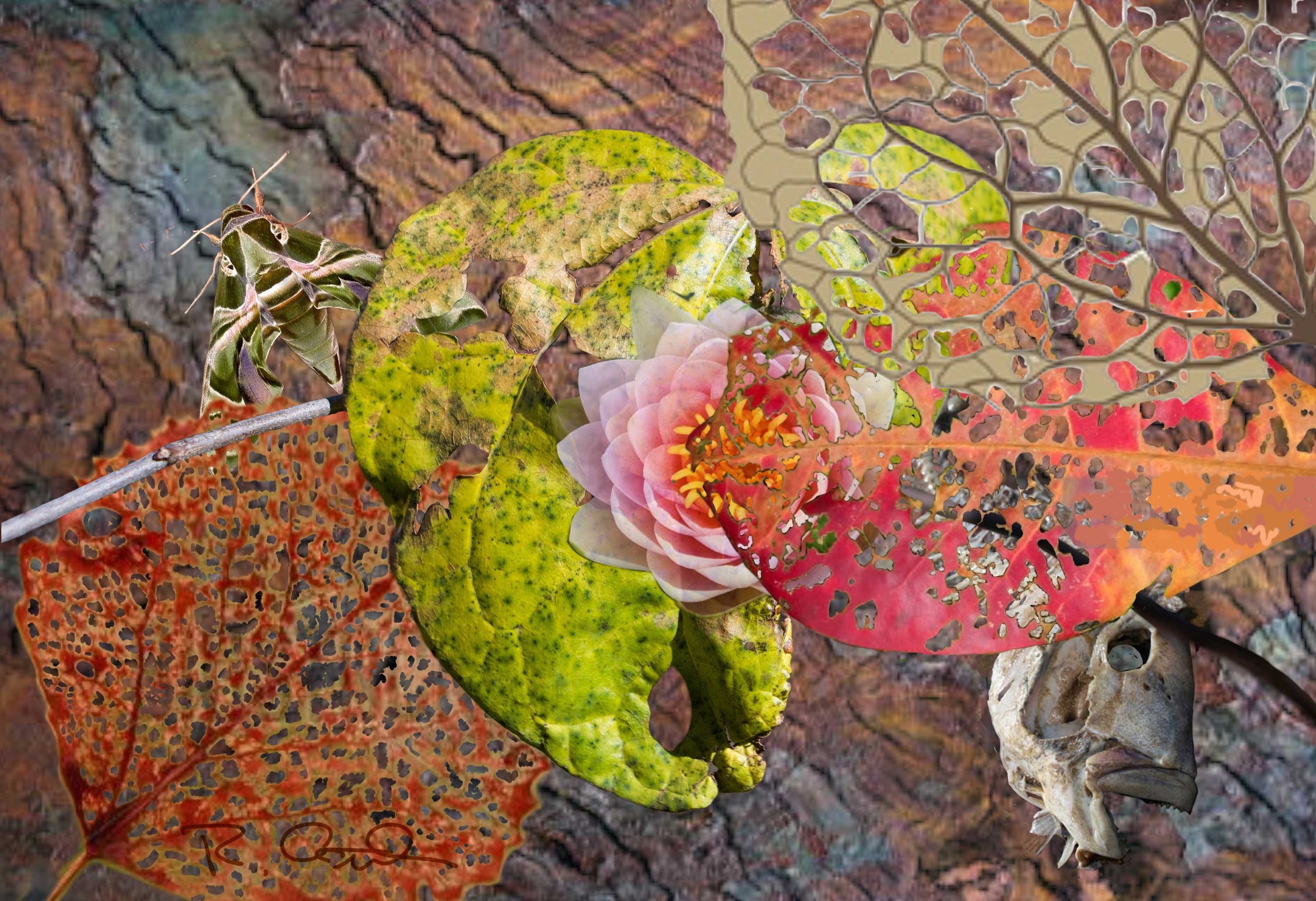
Painting, “And Yet, and Yet” by Robert Althouse
“The world of dew
Is a world of dew,
and yet, and yet . . . “
~ Issa
(written after the death of his young daughter)
Ichigo Ichie is a Japanese phrase that translates as “one time, one meeting” or “once in a lifetime encounter.” The term originates from the Japanese tea ceremony (chanoyu) and is most often associated with the 16th century tea master Sen no Rikyū.
The Japanese tea ceremony is closely related to the Zen tradition. They share the same sensibilities about impermanence and the value and weight of each moment. The host prepares for each gathering as if it were the only one they would ever share with their guests, devoting full attention and care to making it meaningful. Guests, in turn, were expected to admire art work in the tea room and receive the moment with equal sincerity and gratitude. It’s a ritualized ceremony celebrating the intimate encounter between the host and guest. This has many levels of meaning, as we’ll unpack further along.
I was once having a conversation about Zen practice with a new student. In the middle of our conversation, she pulled out her cell phone and began texting someone. I was flabbergasted. I wasn’t used to this. I lost my words and could not follow my train of thought, so I asked her to please put it away until we were done. This lack of social awareness is increasingly endemic to our culture as we increasingly lose of capacity to focus and connect with each other through authentic, genuine conversations.
Each moment of our lives is unique and unrepeatable. Even if you meet the same person tomorrow, in the same place, at the same time, you will both be different. As I write these words, this moment will never come again. And as you read these words, this moment will never come again for you. This experience will never occur in the same way ever again.
The notion of impermanence (mujo) is a very basic, important Buddhist teaching. What we are doing matters. It’s not a dress rehearsal. We are not passive consumers of life watching from the sidelines. We all have skin in the game.
Time is an illusion on many levels, but a very convincing one for most of us. We are easily caught by thoughts of the past or fears about the future. Even this moment, if we try to capture it, is already gone. Basho expresses this in the following haiku:
“Even in Kyoto,
hearing the cuckoo’s cry,
I long for Kyoto.”
In the Rinzai tradition there is a teaching about guest and host from the Record of Rinzai called “Four Guest-Host Relations” (四賓主, shi binshu). The superfical reading is of the teacher-student encounter: the guest sizing up the host; the host sizing up the guest; host meeting host; or guest meeting guest. It was a way to understand the different ways two people could encounter each other: who is grounded, who is reaching, who is awake to the moment, and who is being carried away by it.
But the deeper meaning is metaphysical and this is where it touches Ichigo Ichie. Host (主, shu) is our true nature, that unshakable circle without a center, the sameness outside time and space, where there is no coming or going. We cannot understand this with our intellect because it’s ungraspable. Zen points to this formless, sacred nature. Guest (賓, hin) is the differences where everything comes and goes. Our phenomenal world is made up of many diverse and wonderful forms. Here everything is always changing, coming and going. In Zen, it’s important to appreciate Host and Guest as two sides of the same coin. They are not-two. Together, they are the operating manual for our humanity.
Ichigo Ichie clarifies why our encounters in life matter, because they will never come again. If you know and appreciate this, you can meet yourself and others with a deep intimacy that is open-hearted and tender. And this is what matters. If you know this, life will be a blessing. If you don’t, it may be a waste of time.
My wife and I went to dinner with Karleen Manchanda, her daughter and Karleen’s parents recently. Afterwards we went to listen to Jake Shimabukuro give a stunningly artistic performance on the ukulele at the North Shore Center for Performing Arts. During his performance, he played a beautiful piece called “Ichigo Ichie.” I enclose it here for your pleasure. Enjoy.
If we really examine this moment carefully, it is unknowable, ungraspable. In the 20th Case of the Shōyōroku, there is an exchange between Jizo Keichin and Hōgen Bun’eki as follows:
Jizō asked Hōgen, “Where are you going?”
Hōgen said, “Around in pilgrimage.”
Jizō said, “What is the purpose of pilgrimage?”
Hōgen said, “I don’t know.”
Jizō said, “Not knowing is most intimate.”
At these words Hōgen was awakened.
Remember how when the pandemic hit we suddenly became keenly aware of the things we had taken for granted: friends and family who passed away, face-to-face encounters, toilet paper. As things unravel further in our chaotic times, those losses may multiply, so it helps to remember what is important. What do you value? When everything is taken away what matters most to you? Buddhism teaches that ours is a precious human life, so we should not take it for granted. Please deeply love and appreciate your fellow humans of this spinning blue ball in space. We will not pass this way again.
~ Roshi Robert Althouse © 2026
Such a beautiful reminder to treasure each moment as truly one of a kind. Ichigo ichie is one of those concepts that stays with you once you really feel it.